
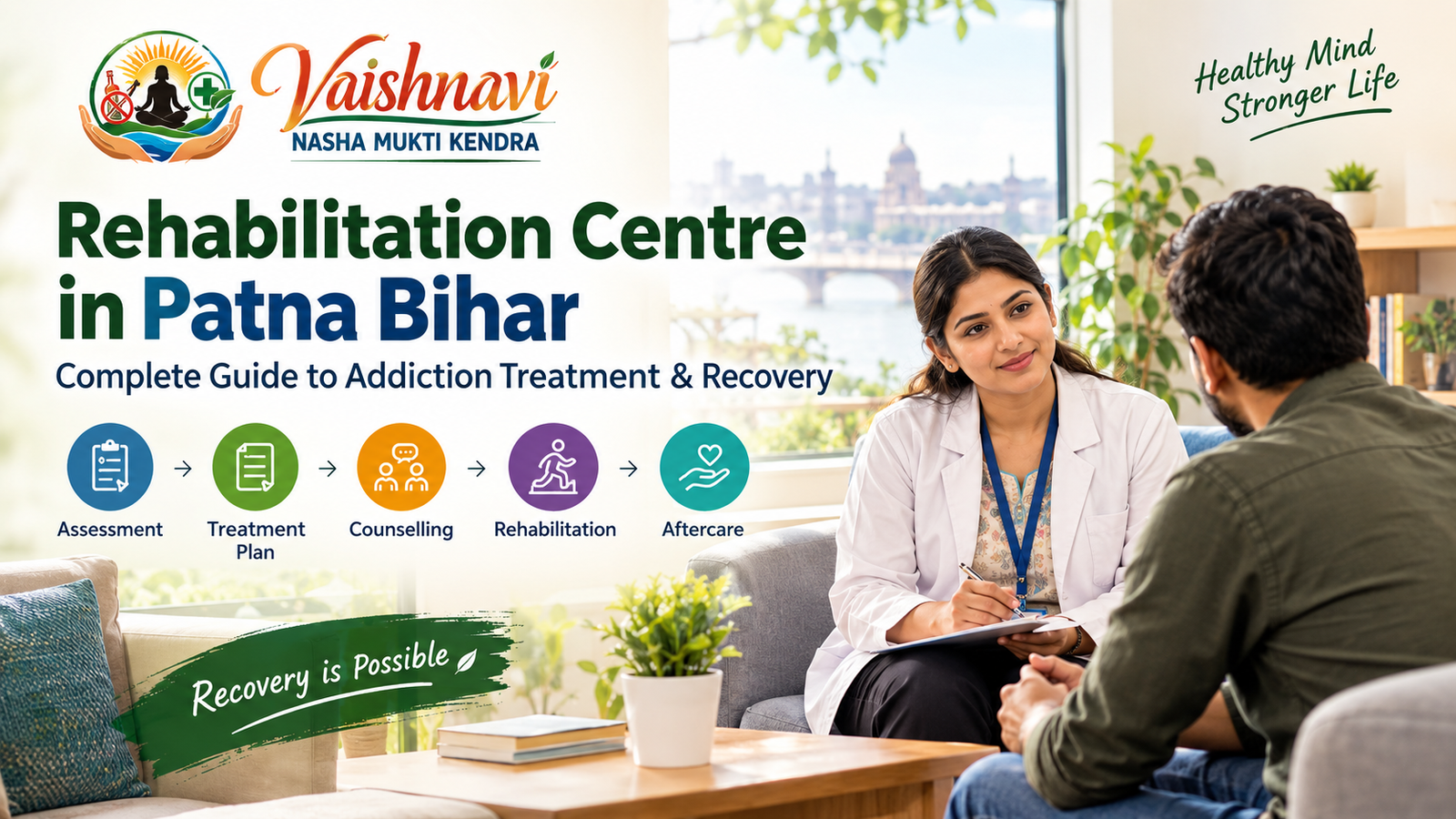
Finding the right rehabilitation centre in Patna Bihar can be a difficult decision for a family. When someone is struggling with alcohol or drug addiction, family members often have many questions. They may want to know how treatment works, what happens after admission, whether counselling is included, how long rehabilitation takes, and what support is available after treatment.
A rehabilitation centre provides a structured environment where a person can receive support for recovery. Depending on individual needs, treatment may include assessment, treatment planning, withdrawal management, counselling, behavioural support, family involvement, relapse prevention and aftercare.
The World Health Organization (WHO) and United Nations Office on Drugs and Crime (UNODC) recommend treatment approaches that are evidence-based, ethical and suited to the individual needs of people with drug use disorders.
For families in Patna, understanding the treatment process can make the decision easier. This guide explains what to expect from a rehab centre in Patna, what questions to ask, and how recovery support can continue after the main treatment programme.
What Is a Rehabilitation Centre?
A rehabilitation centre is a facility that provides structured support for people dealing with addiction and other health-related recovery needs.
In the case of alcohol or drug addiction, rehabilitation can involve more than simply stopping substance use. A person’s physical health, emotional wellbeing, behaviour, family relationships and daily routine may also need attention.
A rehabilitation programme may include:
- Initial assessment
- Personalised treatment planning
- Withdrawal management when required
- Individual counselling
- Group counselling
- Behavioural support
- Family counselling
- Relapse prevention
- Recovery planning
- Aftercare support
The exact services can vary from one centre to another. Treatment should also be based on the individual’s health and recovery needs rather than using the same approach for everyone.
WHO describes drug use disorders as treatable health conditions and supports comprehensive, evidence-based treatment and care.
How Does a Rehabilitation Centre in Patna Help With Addiction Recovery?
Addiction can affect many areas of a person’s life. It can influence health, work, studies, relationships, finances and family life.
A rehabilitation centre in Patna Bihar can provide a structured setting where a person can focus on treatment and recovery.
The treatment process may involve several stages.
1. Initial Assessment and Consultation
The first step is usually an assessment.
The treatment team may collect information about:
- Substance use history
- Duration and pattern of use
- Previous treatment
- Physical health
- Emotional wellbeing
- Family background
- Daily routine
- Previous recovery attempts
This information helps the team understand the person’s situation.
Assessment is important because every person has different needs. Someone who has used a substance for a long period may require a different treatment plan from someone with a different history.
2. Personalised Treatment Planning
After assessment, the treatment team can prepare a treatment plan.
The plan may include counselling, medical support, withdrawal management, behavioural support, family involvement and aftercare.
A personalised plan gives the treatment process a clear direction.
WHO and UNODC international standards recommend treatment services that match the specific needs and circumstances of the individual.
3. Detoxification and Withdrawal Management
Families often hear the word detox when they start looking for addiction treatment.
Detoxification refers to the process of managing the physical effects of stopping a substance. Withdrawal can vary depending on the substance, the person’s health and the pattern of use.
Detox is not the same as complete rehabilitation.
A person may need further counselling, behavioural support and recovery planning after withdrawal management. Some withdrawal situations can also require medical supervision, so families should discuss this with an appropriate healthcare professional.
WHO’s treatment standards include assessment and management of withdrawal among the services that may be required for people with drug use disorders.
4. Addiction Counselling
Counselling is an important part of many rehabilitation programmes.
During counselling, a person can discuss personal concerns, emotional difficulties, triggers and habits related to substance use.
Counselling may help a person:
- Understand their triggers
- Develop healthier coping skills
- Improve decision-making
- Work on motivation
- Recognise unhealthy patterns
- Prepare for life after treatment
Individual counselling provides one-to-one support. Group counselling can give people an opportunity to learn from shared experiences.
WHO includes psychosocial and behavioural interventions within evidence-based treatment approaches for substance use disorders.
5. Structured Rehabilitation
Recovery often requires changes in daily habits.
A structured rehabilitation programme may help a person develop a healthier routine through counselling, recovery activities, behavioural support and other appropriate services.
A stable routine can help a person focus on treatment instead of returning to old patterns.
WHO and UNODC standards describe residential treatment as potentially including group work, individual psychosocial interventions, family interventions, life skills and recovery-support activities.
6. Family Support
Addiction can affect the whole family.
Parents, spouses, siblings and other family members may feel worried, frustrated or unsure about how to help.
Family counselling can help relatives understand:
- What addiction means
- How recovery works
- How to communicate in a healthier way
- How to support treatment
- How to recognise possible warning signs
- Why continued support can matter after treatment
Family members should also receive clear information about the treatment process and what they can realistically expect.
7. Relapse Prevention
Completing a treatment programme does not mean that a person will never face difficulties again.
After returning home, a person may face stress, old habits, difficult emotions or social situations that can affect recovery.
Relapse prevention focuses on preparing for such situations.
A recovery plan may include:
- Identifying personal triggers
- Developing healthy coping strategies
- Maintaining a structured routine
- Staying connected with supportive people
- Continuing counselling when recommended
- Seeking professional help when needed
The aim is to help the person continue making healthy choices after the main treatment period.
8. Aftercare and Follow-Up
Aftercare is an important part of long-term recovery.
It may include:
- Follow-up counselling
- Family support
- Recovery meetings where appropriate
- Progress monitoring
- Relapse prevention support
- Lifestyle guidance
- Referral to other healthcare professionals when needed
WHO’s treatment standards emphasize continuity of care across treatment and recovery services.
What Treatment Services Are Available at a Rehab Centre in Patna?
The services available depend on the individual centre and the person’s treatment needs.
A rehabilitation programme may provide:
Assessment and Consultation
The team reviews the person’s substance use and general treatment needs.
Counselling
Counselling can address emotional, behavioural and recovery-related concerns.
Detox or Withdrawal Support
Some people may require supervised withdrawal management as part of their treatment.
Behavioural Support
This can help people work on habits, triggers and coping skills.
Family Counselling
Families can learn how to provide healthier and more practical support.
Relapse Prevention
The treatment team can help create a plan for managing future challenges.
Aftercare
Follow-up support can help maintain progress after the main treatment programme.
Families should always confirm the exact services available before admission.
What Happens During Addiction Rehabilitation?
The treatment journey can look different for every person, but a simple overview is:
Assessment → Treatment Plan → Withdrawal Management When Needed → Counselling → Rehabilitation → Family Support → Relapse Prevention → Aftercare
Let’s look at these steps in more detail.
Step 1: Assessment
The treatment team understands the person’s current condition, substance use history and recovery needs.
Step 2: Treatment Planning
A suitable treatment plan is prepared based on the assessment.
Step 3: Withdrawal Management
If required, the person receives appropriate support during withdrawal. Medical supervision may be necessary in some situations.
Step 4: Counselling
The person works on emotional, behavioural and recovery-related concerns through appropriate counselling.
Step 5: Rehabilitation
The person follows a structured recovery routine and develops healthier habits and coping skills.
Step 6: Family Involvement
Where appropriate, family members can participate in counselling and learn how to support recovery.
Step 7: Relapse Prevention
The person prepares for situations that may make continued recovery difficult.
Step 8: Aftercare
Follow-up support helps the person continue working towards recovery after completing the main programme.
How Long Does Rehabilitation Treatment Take?
There is no single treatment duration that works for everyone.
Treatment length can depend on several factors, including:
- Type of substance
- Pattern and duration of use
- Level of dependence
- Physical health
- Emotional wellbeing
- Previous treatment
- Individual recovery goals
- Response to treatment
Some people may need more structured support, while others may continue recovery through different levels of care.
A family should therefore avoid choosing a centre only because it promises a fixed number of days. The quality and suitability of the treatment plan are more important.
WHO’s international standards support a range of treatment settings and services based on individual needs.
What Is a Typical Day Like in a Rehabilitation Centre?
Many families want to know what daily life looks like before choosing a rehab centre in Patna.
The routine varies between centres and can also change according to the person’s treatment plan.
A structured day may include:
Morning
- Wake-up and personal hygiene
- Breakfast
- Wellness activities
- Preparation for treatment sessions
Daytime
- Individual counselling
- Group sessions
- Recovery-focused activities
- Behavioural support
- Meals and rest
Evening
- Recovery activities
- Reflection
- Family communication where permitted
- Preparation for the next day
- Rest
The purpose of a structured routine is to create stability and give the person regular time for treatment and recovery activities.
How Does Counselling Help During Addiction Recovery?
Counselling can give a person a safe and structured opportunity to discuss issues related to addiction.
It may help with:
- Understanding triggers
- Managing emotions
- Developing coping skills
- Improving communication
- Building motivation
- Understanding unhealthy patterns
- Preparing for life after treatment
Individual Counselling
Individual counselling provides one-to-one interaction with a trained professional or counsellor, depending on the programme.
The conversation can focus on the person’s specific recovery needs.
Group Counselling
Group counselling can allow people to share experiences and learn from others who are also working on recovery.
Family Counselling
Family counselling can help relatives understand addiction and communicate more effectively.
WHO’s treatment and care guidance supports access to evidence-based and quality care for substance use disorders.
Why Is Family Support Important During Rehabilitation?
Recovery does not happen only inside a rehabilitation centre.
When a person returns home, the family environment can become an important part of continued recovery.
Families can support recovery by:
- Maintaining healthy communication
- Encouraging treatment follow-up
- Supporting a stable routine
- Avoiding unnecessary judgement
- Understanding personal triggers
- Encouraging professional help when needed
Family members should also understand that they cannot control every part of another person’s recovery.
A supportive approach works better than blame or shame.
WHO and UNODC standards also recognise the need to connect treatment programmes with services that can support family members when appropriate.
How to Choose the Best Rehabilitation Centre in Patna?
Searching for the best rehabilitation centre in Patna can bring many options. Instead of choosing only on the basis of advertisements or online claims, families should ask practical questions.
Check the Treatment Process
Ask whether the centre provides:
- Assessment
- Treatment planning
- Counselling
- Withdrawal management when required
- Rehabilitation support
- Relapse prevention
- Aftercare
Ask About Professional Support
Find out who provides medical and counselling support.
Ask how the centre handles health concerns that may arise during treatment.
Check the Facility
Families can ask about:
- Accommodation
- Hygiene
- Food
- Privacy
- Daily routine
- Family communication
- Safety arrangements
Understand the Aftercare Plan
Do not ask only:
“How many days is the programme?”
Also ask:
“What support will be available after the main treatment is completed?”
Aftercare can be an important part of continuing recovery.
Ask Questions Before Admission
Before making a decision, families can ask:
- What does the treatment process include?
- Is an assessment completed before treatment?
- How is withdrawal managed?
- What counselling is available?
- Can family members participate?
- What is the daily routine?
- What happens after discharge?
- How are medical concerns handled?
These questions can help families compare treatment options more carefully.
Why Consider a Rehabilitation Centre in Patna Bihar?
For families living in Patna and nearby areas, choosing a local rehabilitation centre can make treatment communication more convenient.
Local treatment may make it easier for families to:
- Stay connected with the treatment team
- Participate in counselling when appropriate
- Visit according to centre policies
- Support recovery after discharge
- Vaishnavi Nasha Mukti KendraContinue follow-up care
is a local option for families looking for rehabilitation and addiction recovery support in Patna.
Families can discuss their situation directly with the centre and understand which services may be suitable for their needs.
Treatment should always be based on an individual’s health and recovery requirements rather than on a general promise of results.
What Happens After Completing Rehabilitation?
Finishing a rehabilitation programme is an important milestone, but recovery can continue after discharge.
A person may benefit from:
- Follow-up counselling
- Family support
- A stable daily routine
- Continued recovery activities
- Trigger management
- Relapse-prevention planning
- Professional support when required
The person and family should understand the next steps before leaving the centre.
A clear aftercare plan can make the transition from structured treatment to everyday life easier.
Key Takeaways
A rehabilitation centre in Patna Bihar can provide structured support for people dealing with addiction.
The treatment process may include:
- Initial assessment
- Personalised treatment planning
- Withdrawal management when required
- Addiction counselling
- Behavioural support
- Family counselling
- Relapse prevention
- Recovery planning
- Aftercare
Every person’s recovery journey is different. A suitable treatment plan should consider the person’s health, substance use history, recovery needs and support system.
Most importantly, detoxification and rehabilitation are not the same thing. Detox may address withdrawal, while rehabilitation can address the wider physical, emotional, behavioural and social needs related to recovery.
Frequently Asked Questions About Rehabilitation Centre in Patna, Bihar
What is a rehabilitation centre?
A rehabilitation centre provides structured support to people recovering from addiction and other health conditions. Addiction treatment may include assessment, counselling, withdrawal management, behavioural support, family involvement, relapse prevention and aftercare.
What does a rehabilitation centre in Patna do?
A rehabilitation centre in Patna may provide addiction assessment, treatment planning, counselling, rehabilitation support and recovery planning. The services available depend on the centre and the individual’s treatment needs.
What happens when someone enters rehab?
Treatment commonly begins with an assessment. The treatment team reviews the person’s substance use, health and recovery needs before preparing an appropriate treatment plan.
Is detox the same as rehabilitation?
No. Detoxification focuses on managing the process of stopping a substance and dealing with withdrawal when it occurs. Rehabilitation can include counselling, behavioural support, family involvement and relapse prevention.
Does a rehab centre provide counselling?
Many rehabilitation programmes include counselling. Depending on the programme, this may include individual, group and family counselling.
How long does rehabilitation treatment take?
There is no fixed duration for everyone. Treatment length depends on the person’s substance use, health, previous treatment and recovery needs.
Can family members participate in rehabilitation?
Family participation may be possible through counselling, planned communication and other support activities. The exact approach depends on the centre’s policies and the person’s treatment plan.
How do I choose the best rehabilitation centre in Patna?
Look at the treatment approach, professional support, counselling services, facility, daily routine, family involvement and aftercare plan. Ask clear questions before admission rather than relying only on promotional claims.
What happens after rehabilitation?
After rehabilitation, a person may continue with counselling, follow-up care, family support, recovery activities and relapse-prevention planning. Continued support can help maintain progress.
Can a rehabilitation centre help with alcohol and drug addiction?
Rehabilitation programmes can provide treatment and recovery support for alcohol and drug-related problems. The appropriate approach depends on the substance involved and the person’s health and treatment needs.