

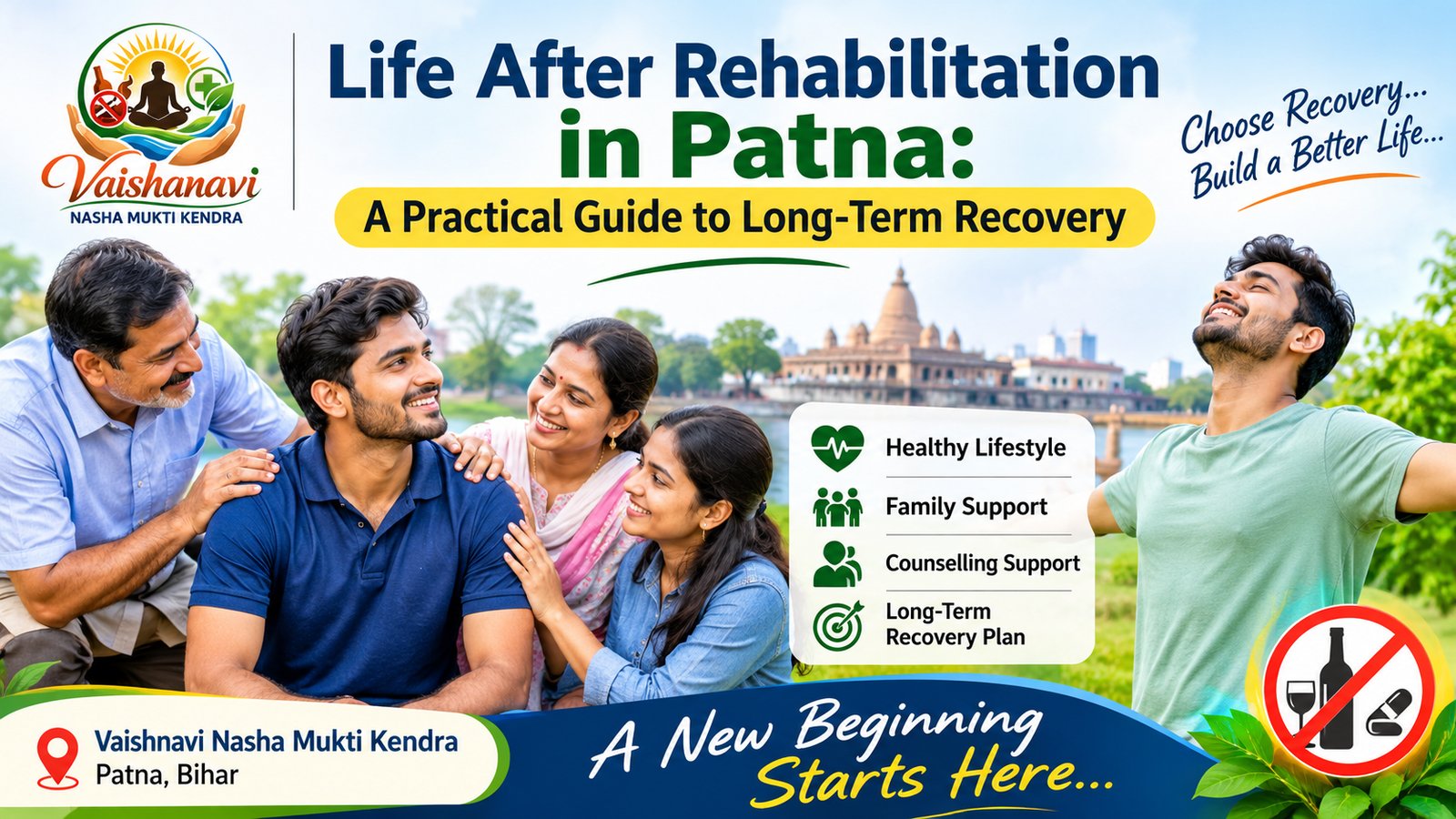
Completing a rehabilitation programme is an important step towards a healthier life. However, recovery does not end when a person leaves a rehabilitation centre. The next stage involves building healthy habits, managing everyday responsibilities, strengthening relationships and continuing to seek support when needed.
For many individuals and families, life after rehabilitation can bring new questions. How can someone maintain progress at home? What role does family support play? How can a person manage stress and return to work or studies?
Understanding these questions can make the transition easier. Life after rehabilitation in Patna becomes more manageable when a person follows a practical recovery plan and receives appropriate support from family members and qualified professionals.
Vaishnavi Nasha Mukti Kendra in Patna, Bihar, provides information about its rehabilitation and counselling services for individuals and families seeking addiction-related support. This guide explains practical steps that can help people work towards long-term recovery.
What Happens After Completing Rehabilitation?
Rehabilitation helps individuals address addiction-related challenges and develop healthier ways to manage daily life. After completing a programme, a person begins applying these skills at home, at work and in social situations.
This transition can feel encouraging, but it may also require patience. Familiar surroundings, personal responsibilities and relationships can create challenges. Each person’s experience is different, so recovery plans should reflect their individual needs.
Understanding the Post-Rehabilitation Phase
Life after rehab often involves rebuilding a daily routine, improving communication with family members and returning to regular responsibilities. Some people may also need continued counselling, medical appointments or other professional support.
The aim is not to change everything overnight. Small, realistic steps can help a person develop confidence and maintain healthy routines over time.
Why Recovery Requires Continued Support
Completing rehabilitation is a milestone, not a guarantee that future challenges will disappear. Some people experience stress, difficult emotions or situations that make recovery harder.
Regular follow-up appointments and a clear support plan can help individuals recognise difficulties early and seek appropriate guidance. Families can also play an important role by offering encouragement without judgement.
How to Manage Life After Rehabilitation in Patna
Managing life after rehabilitation becomes easier when a person has a clear routine and realistic goals. A supportive environment can help individuals focus on their well-being and gradually resume everyday activities.
1. Build a Healthy Daily Routine
A structured routine provides direction throughout the day. It can also reduce unplanned periods that may contribute to stress or unhealthy habits.
A practical routine may include:
- Waking up and going to bed at consistent times.
- Eating regular, balanced meals.
- Making time for work, studies or useful daily activities.
- Including suitable physical activity.
- Attending recommended counselling sessions.
- Spending time with supportive friends and family.
The routine should match the person’s health, responsibilities and recovery plan. It is better to begin with a few manageable habits than to create a demanding schedule that becomes difficult to maintain.
2. Set Small and Realistic Recovery Goals
Large goals can feel overwhelming when someone is rebuilding their life. Breaking them into smaller steps makes progress easier to track.
For example, a person might begin by improving their sleep schedule, completing daily responsibilities or attending every recommended follow-up appointment.
Family members can encourage these efforts without putting unnecessary pressure on the individual. Progress may not always happen at the same pace, and setbacks should be addressed with appropriate support rather than blame.
3. Maintain Positive Social Connections
Relationships can influence a person’s recovery experience. Spending time with people who respect recovery goals can provide encouragement and a sense of belonging.
Individuals should consider setting healthy boundaries with people or situations that create pressure to return to harmful habits. They can also explore positive activities, community groups or suitable support programmes.
4. Prepare for Everyday Challenges
Returning to familiar places and responsibilities may bring unexpected stress. Planning ahead can help a person respond more thoughtfully.
A personal plan may identify difficult situations, trusted people to contact and steps to take when additional support is needed. If cravings, distress or other concerning symptoms appear, the person should contact an appropriate healthcare professional or follow their existing treatment plan.
Why Family Support Is Important After Rehabilitation
Addiction can affect the whole family, not just the individual receiving treatment. Family members may experience worry, frustration or uncertainty about what to do next.
A supportive home environment can help rebuild trust and encourage healthier communication.
Create a Supportive Home Environment
Family members can help by maintaining a respectful atmosphere and encouraging healthy daily habits. Simple activities, such as sharing meals, discussing plans and spending time together, can help restore everyday connections.
Families should also respect personal boundaries and avoid turning every conversation into a discussion about addiction. A person needs opportunities to develop independence while receiving appropriate support.
Communicate Without Judgement
Open communication helps people express concerns before they become harder to manage. Listen carefully, ask questions calmly and avoid using hurtful language.
If disagreements occur, try to discuss them when everyone feels calm. Family counselling may help members understand each other’s needs and develop healthier ways to resolve conflicts.
Encourage Professional Follow-Up
Families should encourage the person to attend recommended appointments and follow professional advice. They should not attempt to manage serious medical or psychological concerns on their own.
If the individual shows concerning changes in mood, behaviour or health, contact a qualified healthcare professional for guidance.
Healthy Lifestyle Habits for Long-Term Recovery
A healthy lifestyle supports general well-being during recovery. It does not replace professional treatment, but it can help a person develop a more stable and satisfying daily life.
Focus on Sleep and Balanced Nutrition
Regular sleep and balanced meals can support energy, concentration and overall health. Try to maintain consistent sleeping hours and include a variety of nutritious foods in daily meals.
A healthcare professional can provide individual advice when medical conditions, medication or nutritional concerns require special attention.
Include Suitable Physical Activity
Walking, stretching or another activity suited to the person’s health can help make the day more active. Start at a comfortable level and follow medical advice when needed.
Physical activity should support well-being rather than become another source of pressure.
Learn Healthy Ways to Manage Stress
Stress can affect thoughts, emotions and daily decisions. Learning practical coping skills may help people respond to difficult situations more effectively.
Some useful options include:
- Talking with a trusted person.
- Practising relaxation or breathing exercises.
- Writing down thoughts and concerns.
- Taking breaks when responsibilities feel overwhelming.
- Seeking professional counselling when needed.
People should remember that asking for help is a responsible step. They do not have to manage every challenge alone.
How Counselling and Recovery Support Help After Rehab
Recovery support after rehabilitation can provide continuity as individuals adjust to life outside a structured treatment environment. The type and frequency of support depend on personal needs and professional recommendations.
Benefits of Follow-Up Counselling
Counselling can help people understand emotional challenges, improve coping skills and work through concerns that affect everyday life. Follow-up sessions also provide an opportunity to review recovery goals and discuss difficulties.
A qualified professional can recommend an appropriate schedule based on the individual’s circumstances.
Build a Reliable Support System
A support system may include trusted family members, qualified counsellors, healthcare professionals and suitable peer-support groups.
Each person has different needs. Some may benefit from regular professional appointments, while others may need additional help during stressful periods. The goal is to know whom to contact and how to seek help when necessary.
For more information about the services available, visit Vaishnavi Nasha Mukti Kendra’s treatment page.
Long-Term Recovery Planning: Steps to Maintain Progress
Long-term recovery planning helps individuals prepare for everyday challenges instead of responding to every problem at the last moment.
Create a Personal Recovery Plan
A practical plan can include:
- Personal health and recovery goals.
- Recommended medical appointments and counselling sessions.
- Daily habits that support well-being.
- People who can provide reliable support.
- Situations that may make recovery more difficult.
- Steps to take when professional help is needed.
The plan should be reviewed regularly and adjusted when circumstances change.
Recognise Warning Signs Early
Changes in sleep, mood, relationships or daily routines may indicate that someone needs additional support. These changes do not automatically mean that recovery has failed, but they should not be ignored.
If the person experiences renewed cravings or finds it difficult to follow their recovery plan, contacting a healthcare professional early can help them understand the next steps.
Know When to Seek Professional Help
Do not wait for a situation to become unmanageable before asking for help. Contact the treating professional when symptoms return, emotional distress increases or daily functioning becomes difficult.
For severe or urgent medical concerns, seek emergency medical care. Recovery plans work best when they include clear steps for accessing appropriate support.
How Vaishnavi Nasha Mukti Kendra Supports the Recovery Journey
Vaishnavi Nasha Mukti Kendra is located in Patna, Bihar, and provides information about addiction rehabilitation, counselling and related treatment services.
Individuals and families can learn about the centre’s approach, available treatments and support options before deciding what may suit their needs. Treatment requirements differ from person to person, so it is important to discuss individual circumstances with qualified professionals.
You can read more about Vaishnavi Nasha Mukti Kendra and its approach to addiction recovery.
If you or a family member needs information about the available services, visit the contact page to speak with the centre.
Frequently Asked Questions About Life After Rehabilitation
1. What should a person do after completing rehabilitation?
A person should follow their recovery plan, attend recommended appointments, maintain healthy daily habits and stay connected with supportive people. Professional guidance can help them manage challenges that arise after rehabilitation.
2. How can someone maintain a healthy life after rehab?
A consistent routine, balanced meals, suitable physical activity, adequate sleep and healthy relationships can support general well-being. Follow-up counselling and personalised professional guidance may also be helpful.
3. Why is family support important after rehabilitation?
Family support can provide encouragement, improve communication and help create a stable home environment. Families should offer support without blame and seek professional advice when concerns arise.
4. Is counselling necessary after completing rehabilitation?
The need for counselling depends on the individual’s circumstances and treatment plan. A qualified professional can recommend whether continued counselling or other follow-up services would be beneficial.
5. How long does long-term addiction recovery take?
There is no single timeline that applies to everyone. Recovery depends on several factors, including the person’s health, circumstances, support system and treatment needs. A personalised plan can help guide progress over time.
6. Where can families find rehabilitation support in Patna?
Families can learn about local rehabilitation services, available treatment options and counselling support. They should check the centre’s services, ask questions about professional care and choose support that meets the individual’s needs.
Key Takeaways: Building a Healthy Life After Rehabilitation
Life after rehabilitation involves more than leaving a treatment programme. It requires patience, healthy routines, supportive relationships and a willingness to seek help when needed. Families can contribute by encouraging progress without judgement, while qualified professionals can guide ongoing care.
With realistic goals and a suitable recovery plan, individuals can continue working towards a healthier and more stable life.
Take the next step: Contact Vaishnavi Nasha Mukti Kendra in Patna to ask about its rehabilitation and counselling services.