

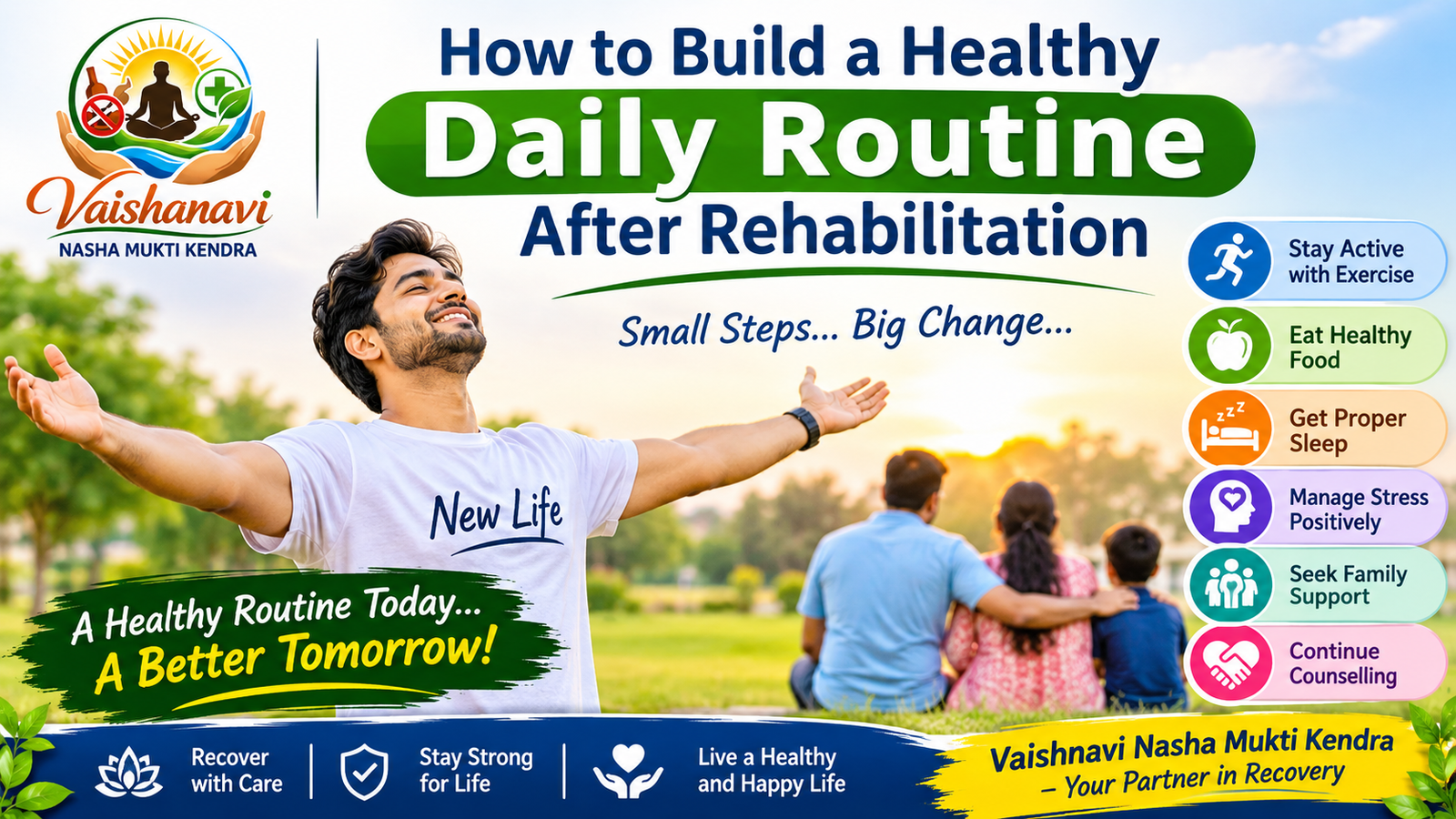
Completing a rehabilitation programme is an important step towards a healthier and more balanced life. However, recovery does not end when a person leaves a rehabilitation centre. Returning home brings new responsibilities, daily challenges and different situations that require patience and preparation.
Many people find it difficult to adjust to normal life after rehabilitation. They may struggle with free time, stress, sleep problems or old social habits. Without proper planning, maintaining a healthy lifestyle can become challenging.
This is why building a daily routine after rehabilitation is so important. A structured routine helps a person stay organised, develop positive habits and focus on personal goals. Simple activities such as waking up on time, eating healthy food, exercising, spending time with family and attending counselling sessions can support long-term recovery.
In this guide, we will explain how to create a healthy daily schedule after rehabilitation and how families can support someone during this important stage of life.
Why Is a Daily Routine Important After Rehabilitation?
A healthy routine gives structure to everyday life. During rehabilitation, people usually follow a planned schedule that includes counselling, activities, rest and personal development. After returning home, maintaining some of these habits can help them adjust to their surroundings.
A proper recovery routine offers several benefits:
- Better time management: A daily schedule helps people use their time productively.
- Healthy lifestyle: Regular meals, physical activity and proper sleep support general well-being.
- Emotional balance: Relaxation and positive activities can help manage everyday stress.
- Personal responsibility: Completing small daily tasks can improve confidence.
- Positive relationships: Spending quality time with family and supportive people encourages healthy communication.
- Continued recovery: Regular counselling and follow-up support help people stay connected with their recovery goals.
A daily routine does not need to be complicated. Start with small changes and follow them consistently.
How to Build a Healthy Daily Schedule After Rehabilitation?
Creating a daily schedule after rehabilitation does not mean filling every hour with activities. The main goal is to develop a balanced lifestyle that includes personal care, work, rest, exercise and social support.
Here are some useful habits to include in your everyday routine.
1. Start Your Day with a Positive Morning Routine
A healthy morning can set a positive direction for the rest of the day. Try to wake up at a consistent time instead of following an irregular sleep schedule.
After waking up, complete your personal hygiene routine, drink water and spend a few minutes relaxing. You can also go for a morning walk or practise light stretching if your health allows it.
Some useful morning activities include:
- Waking up at a fixed time.
- Making your bed and keeping your room organised.
- Taking a short walk.
- Practising meditation or breathing exercises.
- Planning important activities for the day.
- Eating a healthy breakfast.
These small activities can help create a sense of discipline and purpose.
2. Follow a Balanced and Healthy Diet
Food plays an important role in maintaining general health. After rehabilitation, people should focus on regular meals and balanced nutrition.
Include different food groups in your daily diet. Fresh fruits, green vegetables, whole grains, pulses, milk products and other suitable protein sources can help meet nutritional needs.
Some healthy eating habits include:
- Eat breakfast, lunch and dinner at regular times.
- Include fresh fruits and vegetables.
- Drink enough water throughout the day.
- Avoid skipping meals.
- Reduce excessive consumption of highly processed foods.
- Follow professional dietary advice if you have specific health needs.
A balanced diet supports physical health and helps establish a stable daily routine. People with nutritional deficiencies or other medical concerns should consult a qualified healthcare professional.
3. Include Regular Physical Activities
Physical activity can support general health, improve mood and provide a positive way to spend free time.
You do not need to begin with intense workouts. Start with activities that match your physical condition and gradually build consistency.
Consider these activities:
- Morning or evening walks.
- Light stretching.
- Yoga under suitable guidance.
- Cycling, if appropriate.
- Gardening.
- Playing outdoor games.
- Simple household activities.
Regular movement can become an enjoyable part of your recovery routine. If you have an existing medical concern or have recently completed treatment, ask a healthcare professional which activities are suitable for you.
4. Maintain a Proper Sleep Schedule
Sleep is an important part of a healthy lifestyle. Irregular sleeping habits can affect energy, mood and everyday functioning.
Try to sleep and wake up at approximately the same time every day. Keep your bedroom comfortable and avoid unnecessary late-night screen use.
Follow these simple sleep habits:
- Maintain a regular bedtime.
- Avoid excessive screen time before sleeping.
- Keep your sleeping area clean and comfortable.
- Avoid heavy meals close to bedtime.
- Follow a relaxing evening routine.
- Speak with a healthcare professional if sleep problems continue.
Good sleep habits can make it easier to follow other daily activities.
5. Spend Time on Productive Activities
After rehabilitation, some people may have more free time than they had during treatment. Without a plan, they may find it difficult to stay occupied.
Using free time productively can help create a sense of purpose.
You can try:
- Reading books or newspapers.
- Learning a new skill.
- Returning to education.
- Looking for suitable work opportunities.
- Helping with household responsibilities.
- Gardening or cooking.
- Developing creative hobbies.
- Spending quality time with family.
Choose activities that match your interests and abilities. You do not need to achieve everything immediately. Focus on making steady progress.
What Healthy Habits Should You Follow After Rehab?
Building a daily schedule is only one part of recovery. Healthy habits also play an important role in maintaining progress.
Maintain Positive Relationships
Spend time with people who respect your recovery goals and encourage healthy decisions. Positive relationships can provide emotional support during difficult situations.
Try to maintain open communication with family members and trusted friends. Avoid social situations that may create unnecessary pressure or expose you to personal triggers.
Practise Stress Management
Stress is a normal part of life, but the way a person manages it matters.
Some helpful stress-management activities include:
- Meditation and relaxation exercises.
- Walking in a peaceful environment.
- Talking to a trusted family member.
- Writing down thoughts and feelings.
- Following a regular sleep schedule.
- Seeking professional counselling when needed.
Learning healthy ways to handle stress can support long-term recovery.
Avoid Situations That May Affect Recovery
Certain people, places, emotions or social situations may act as triggers for someone recovering from addiction.
Identify these situations with the help of a counsellor. Develop a practical plan to manage them safely.
It is also important to avoid returning to social environments where substance use is common or where you may feel pressured to use alcohol or drugs.
Continue Counselling and Follow-Up Support
Completing rehabilitation does not mean that professional guidance is no longer necessary.
Follow-up counselling can help people discuss new challenges, review recovery goals and maintain healthy habits. The frequency and type of support should depend on individual needs.
For more information about addiction recovery, visit the National Institute on Drug Abuse (NIDA), which provides research-based information about substance use disorders and treatment.
Sample Daily Routine After Rehabilitation
A simple daily schedule can make it easier to develop healthy habits. The following example shows how someone can organise their day after rehabilitation.
| Time | Daily Activity |
| 6:30 AM | Wake up and freshen up |
| 7:00 AM | Morning walk or light exercise |
| 8:00 AM | Healthy breakfast |
| 9:00 AM | Work, studies or productive activities |
| 11:00 AM | Short break and personal tasks |
| 1:00 PM | Lunch and rest |
| 3:00 PM | Reading, hobbies or skill development |
| 5:00 PM | Outdoor activities or family time |
| 7:00 PM | Relaxation and personal time |
| 8:00 PM | Dinner |
| 9:00 PM | Plan the next day |
| 10:00 PM | Sleep |
This is only an example. Every person has different responsibilities, health needs and recovery goals. Adjust the schedule according to your treatment plan and professional guidance.
The most important thing is to follow a routine that feels practical and sustainable.
How Can Family Members Help After Rehabilitation?
Family support can make everyday life easier for someone returning home after rehabilitation. A supportive family environment can encourage healthy habits and positive communication.
Here are some ways families can help.
Encourage Healthy Daily Habits
Family members can encourage regular meals, proper sleep, physical activities and productive hobbies. They can also help the person maintain a consistent daily schedule.
Communicate Without Judgement
Listen carefully when the person shares concerns or difficulties. Avoid constant criticism, arguments or unnecessary pressure.
Respectful communication can make it easier to discuss problems and seek help when needed.
Recognise Small Improvements
Recovery involves gradual changes. Appreciate positive efforts such as attending counselling, maintaining a healthy routine or taking responsibility for everyday tasks.
Small improvements deserve recognition.
Maintain Healthy Boundaries
Supporting someone does not mean ignoring harmful behaviour. Families should maintain reasonable boundaries while offering emotional support.
Family members should also take care of their own well-being. Professional family counselling may help when relationships have been affected by addiction.
The World Health Organization (WHO) provides useful information about mental health and well-being that families can explore.
How to Maintain Long-Term Recovery After Rehabilitation?
Long-term recovery requires regular attention and continued support. A person should not depend only on motivation. Building consistent habits and following a suitable recovery plan are equally important.
Here are some practical ways to maintain progress:
- Follow your recovery plan: Continue recommended counselling and follow-up appointments.
- Stay connected with supportive people: Maintain healthy relationships with family members and trusted friends.
- Identify personal triggers: Understand situations that may affect your recovery.
- Use healthy coping strategies: Manage stress through suitable activities and professional guidance.
- Set realistic goals: Focus on small improvements instead of expecting immediate results.
- Use free time positively: Develop hobbies, learn skills and participate in meaningful activities.
- Ask for help when needed: Speak with a qualified professional if you experience difficulties or a return to substance use.
A setback does not mean that recovery is impossible. It is important to seek appropriate support as early as possible and review the recovery plan with a professional.
You can also explore the WHO’s information on substance use to understand the importance of evidence-based treatment and continuing support.
Where Can You Find Rehabilitation and Recovery Support in Patna?
Returning to everyday life after rehabilitation can bring different challenges. Some people may need continued counselling, while others may benefit from family guidance and structured aftercare.
Choosing an appropriate rehabilitation centre is an important decision for patients and families.
Before selecting a centre, consider:
- Whether the centre provides a clear treatment plan.
- Whether qualified professionals are involved in care.
- Whether appropriate medical support is available.
- Whether counselling and behavioural support are provided.
- Whether families can participate in suitable recovery activities.
- Whether follow-up and aftercare arrangements are explained.
Vaishnavi Nasha Mukti Kendra aims to support individuals and families looking for addiction rehabilitation and recovery guidance.
If you are searching for a Nasha Mukti Kendra in Patna, you can visit the Vaishnavi website to learn more about the centre and its available services.
Families should discuss individual treatment needs with qualified professionals before choosing a rehabilitation programme.
Key Takeaways
Building a healthy daily routine after rehabilitation can help a person maintain positive habits and adjust to everyday life.
Remember these important points:
- Follow a consistent morning and evening routine.
- Eat balanced meals and maintain proper hydration.
- Include suitable physical activities.
- Get enough sleep and manage stress.
- Spend time on productive and enjoyable activities.
- Maintain healthy relationships with family and friends.
- Continue counselling and professional follow-up when recommended.
- Seek support whenever recovery becomes difficult.
Recovery is a gradual process. Focus on small, positive changes and build a lifestyle that supports your long-term well-being.
Frequently Asked Questions (FAQs)
1. What should a daily routine after rehabilitation include?
A daily routine after rehabilitation should include regular sleep, balanced meals, suitable physical activities, productive tasks, family time and professional follow-up when needed. A consistent schedule can help a person maintain healthy habits.
2. Why is a daily schedule important after rehab?
A daily schedule provides structure and helps people manage their time. It encourages healthy activities, reduces unplanned idle time and supports consistency in everyday life.
3. Which healthy habits should I follow after rehabilitation?
Follow healthy habits such as eating balanced meals, exercising according to your health, maintaining proper sleep, managing stress, attending counselling and spending time with supportive people.
4. How can I stay motivated after completing rehabilitation?
Set small and realistic goals. Follow a regular routine, celebrate personal improvements, spend time on hobbies and stay connected with supportive people. Professional counselling can also help when motivation becomes difficult.
5. How can family members support someone after rehab?
Family members can encourage healthy habits, maintain positive communication, support counselling appointments and create a respectful home environment. Patience and healthy boundaries are also important.
6. Is exercise important after addiction rehabilitation?
Suitable physical activity can support general health, improve mood and encourage healthy routines. The type and level of exercise should match the person’s health and recovery needs.
7. How can someone maintain long-term recovery after rehabilitation?
A person can support long-term recovery by following a treatment plan, attending recommended counselling, managing personal triggers, maintaining healthy relationships and seeking professional support when needed.
8. Why is counselling important after rehabilitation?
Counselling can help people manage emotional challenges, understand personal triggers, develop coping skills and maintain progress. It can also provide guidance when someone faces difficulties after treatment.