
When a person is struggling with alcohol or drug addiction, the whole family can feel worried and confused. One common question families ask is, “Nasha Mukti Kendra mein kya hota hai?”
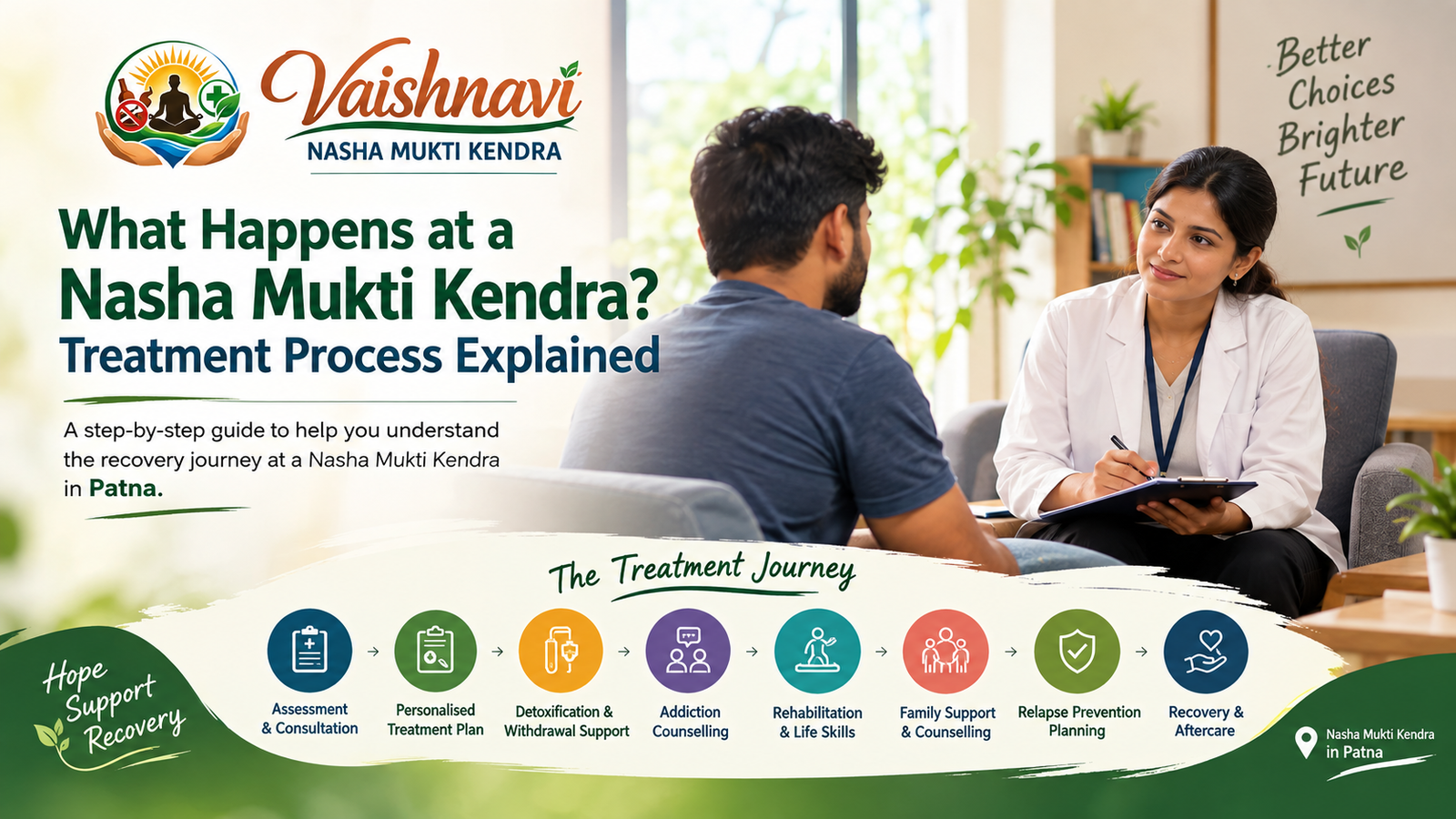
Many people think that rehabilitation only means staying away from alcohol or drugs for some time. In reality, recovery can involve several steps. These may include an initial assessment, treatment planning, withdrawal management when required, counselling, rehabilitation, family support, relapse prevention, and aftercare.
A Nasha Mukti Kendra in Patna can provide a structured environment where a person can focus on recovery with appropriate professional support. The exact treatment plan depends on the person’s substance use, health, recovery needs and response to treatment.
The World Health Organization explains that drug and alcohol rehabilitation can involve medical, psychosocial and recovery-oriented approaches. The type and duration of support should be based on individual needs.
Let’s understand the treatment process step by step.
What Is a Nasha Mukti Kendra?
A Nasha Mukti Kendra is a rehabilitation facility that supports people who want to recover from alcohol or drug addiction.
Treatment may include:
- Initial assessment
- Medical evaluation
- Detoxification or withdrawal management when required
- Individual counselling
- Group counselling
- Behavioural support
- Healthy daily routines
- Family counselling
- Relapse prevention
- Recovery planning
- Aftercare support
Not every person needs the same treatment. A person’s addiction history, physical health, mental health, substance use and previous treatment can influence the recovery plan.
This is why a good rehabilitation programme should begin with understanding the person rather than following the same routine for everyone.
What Happens at a Nasha Mukti Kendra?
The treatment process usually follows several stages. The exact order and services can differ from one centre to another, but the main focus remains the same: helping the person move towards a healthier and more stable life.
Step 1: Initial Assessment and Consultation
The first step is usually an assessment.
During this stage, the treatment team may ask questions about the person’s:
- Alcohol or drug use
- Duration of substance use
- Frequency of use
- Previous treatment
- Physical health
- Emotional wellbeing
- Family background
- Daily routine
- Previous attempts to stop using substances
This information helps the treatment team understand the person’s current situation.
The family may also provide useful information, especially when the person has difficulty explaining their history.
The assessment is important because addiction does not affect everyone in the same way. A person who has been using a substance for a long time may have different treatment needs from someone who has recently developed a problem.
Step 2: Personalised Treatment Planning
After the initial assessment, the treatment team can develop a treatment plan based on the person’s needs.
The plan may include:
- Medical support
- Detoxification or withdrawal management
- Individual counselling
- Group sessions
- Behavioural support
- Family counselling
- Lifestyle improvement
- Relapse prevention
- Aftercare planning
A personalised approach can make treatment more practical because it considers the person’s actual situation.
The World Health Organization also recommends treatment approaches that respond to individual needs rather than applying one fixed duration or method to everyone.
Step 3: Detoxification and Withdrawal Management
Detoxification is an important term that families often hear when they first learn about addiction treatment.
Detoxification means helping the body manage the process of stopping a substance. It can involve medical monitoring and support when withdrawal symptoms occur.
However, detox is not the same as complete addiction treatment.
A person may stop using a substance during detox, but long-term recovery can require further counselling, behavioural support and recovery planning. NIDA also notes that detoxification by itself does not address all the psychological, social and behavioural aspects of addiction.
Withdrawal can also be different for different substances and different people. Some forms of withdrawal can become serious and may require medical supervision.
For example, the WHO recommends supported withdrawal management for people with alcohol dependence and notes that people at risk of severe withdrawal or with serious health conditions may need inpatient care.
This is why families should not assume that every person can safely manage withdrawal without professional guidance.
Step 4: Addiction Counselling
Counselling is an important part of many rehabilitation programmes.
During counselling, a person can discuss the problems connected with substance use in a private and supportive setting.
Counselling may help a person:
- Understand addiction triggers
- Recognise unhealthy patterns
- Improve decision-making
- Develop healthier coping skills
- Manage emotional difficulties
- Work on motivation for recovery
- Build better daily habits
- Prepare for life after treatment
Individual counselling gives the person an opportunity to discuss personal concerns. Group sessions can also provide a supportive environment where people can learn from shared experiences.
The WHO recognizes psychosocial interventions as one part of treatment for alcohol dependence, including approaches such as behavioral therapies and motivational interventions.
Why Is Counselling Important During Recovery?
Counselling can help a person understand why substance use has become difficult to control and identify situations that may increase the risk of returning to substance use. It can also help build practical coping strategies and support continued recovery.
Step 5: Behavioural and Rehabilitation Support
Recovery involves more than avoiding alcohol or drugs.
A rehabilitation programme may help a person create a healthier routine and work on behaviours that support long-term recovery.
Depending on the centre and the individual’s treatment plan, activities may include:
- Structured daily routines
- Behavioural support
- Recovery-focused activities
- Stress-management practices
- Communication skills
- Healthy lifestyle habits
- Counselling sessions
- Recreational or wellness activities
The aim is to help the person develop healthier ways to handle everyday situations.
The WHO and UNODC international standards describe drug treatment as a combination of appropriate treatment settings and interventions rather than a single activity.
Step 6: Family Counselling and Support
Addiction does not affect only the person who uses alcohol or drugs. It can also affect parents, spouses, children and other family members.
Family counselling can help relatives understand the recovery process and communicate more effectively.
Families may learn about:
- Addiction and recovery
- Healthy boundaries
- Communication
- Warning signs of relapse
- Ways to provide practical support
- The importance of continuing care
Family support can be especially useful after the person leaves a rehabilitation centre.
WHO also highlights the importance of treatment and support services for people affected by alcohol use disorders and their families.
Step 7: Relapse Prevention Planning
Recovery does not end when a person completes residential treatment.
A person may face difficult situations after returning home, such as stress, old habits, certain social environments or emotional triggers.
Relapse prevention planning focuses on preparing for these situations.
A recovery plan may include:
- Identifying personal triggers
- Developing healthier coping methods
- Maintaining a supportive routine
- Staying connected with family
- Continuing counselling when recommended
- Avoiding situations that may increase the risk of returning to substance use
- Knowing when to ask for professional help
The goal is not simply to complete treatment. The goal is to build skills and support that can help a person continue recovery.
Step 8: Recovery and Aftercare
Aftercare is an important part of the recovery journey.
Depending on the treatment programme, aftercare may include:
- Follow-up counselling
- Family support
- Recovery meetings
- Progress monitoring
- Lifestyle guidance
- Relapse prevention support
- Referral to other healthcare professionals when needed
The exact aftercare plan depends on the person’s needs.
Recovery-oriented services can include continuing community care, case management and peer support, according to WHO recommendations for drug dependence.
This is why families should ask about aftercare before choosing a rehabilitation centre.
How Long Does Treatment at a Nasha Mukti Kendra Take?
There is no single treatment duration that works for everyone.
The length of treatment can depend on:
- Type of substance used
- Severity of substance dependence
- Duration of substance use
- Physical health
- Mental health
- Previous treatment history
- Response to treatment
- Family and social support
Some people may need more structured support, while others may continue treatment through outpatient or community-based services.
WHO guidance also recognises that treatment duration should be based on individual needs rather than one fixed timeline.
Is Detox the Same as Rehabilitation?
No. Detox and rehabilitation are different parts of the treatment process.
Detoxification focuses mainly on managing the physical process of stopping a substance. Rehabilitation addresses wider recovery needs, including behavioural, emotional, social and lifestyle factors.
Detox may be an important first step for some people, but it should not be considered the complete treatment for addiction.
What Is a Typical Day Like at a Nasha Mukti Kendra?
People often want to know what daily life looks like inside a rehabilitation centre.
The routine varies from one centre to another and can also change according to the person’s treatment plan.
A typical structured day may include:
Morning Routine
The day may begin with:
- Wake-up and personal hygiene
- Breakfast
- Basic wellness activities
- Planning for the day’s sessions
Counselling and Treatment Sessions
The person may attend:
- Individual counselling
- Group counselling
- Behavioural support sessions
- Recovery-focused activities
Afternoon Routine
The afternoon may include:
- Treatment sessions
- Healthy meals
- Rest
- Structured activities
- Personal time
Evening Routine
The evening may include:
- Recovery activities
- Reflection
- Family communication where appropriate
- Preparation for the next day
- Rest
The purpose of a structured routine is to create stability and reduce the unorganised habits that can sometimes accompany active addiction.
What Are the Main Goals of Nasha Mukti Kendra Treatment?
The treatment goals can vary from person to person, but they may include:
- Managing substance dependence
- Supporting safe withdrawal when needed
- Understanding addiction triggers
- Developing healthier coping skills
- Improving daily routines
- Supporting emotional wellbeing
- Strengthening family relationships
- Preparing for life after treatment
- Reducing the risk of relapse
- Continuing recovery through aftercare
The focus should remain on the person’s health and long-term recovery rather than simply completing a fixed number of days.
How Can Families Choose a Nasha Mukti Kendra in Patna?
Choosing a rehabilitation centre is an important decision. Families should take time to understand the treatment programme before making a decision.
Here are some useful questions to ask.
Ask About the Treatment Process
Find out whether the centre provides information about:
- Assessment
- Treatment planning
- Detoxification or withdrawal management
- Counselling
- Rehabilitation
- Family support
- Aftercare
Ask About Professional Support
Families should understand who provides medical and counselling support and how the centre handles health concerns during treatment.
Understand the Facility
Ask about:
- Accommodation
- Hygiene
- Food
- Privacy
- Daily routine
- Family communication
- Emergency arrangements
Ask About Aftercare
Do not only ask, “How long is the programme?”
Also ask:
“What support will be available after the person completes the main treatment?”
Aftercare can play an important role in continuing recovery.
Why Consider a Nasha Mukti Kendra in Patna?
For families living in Patna and nearby areas, choosing a local rehabilitation centre can make communication and family involvement more convenient.
A local centre may make it easier for families to:
- Stay connected with the treatment team
- Participate in counselling when appropriate
- Visit according to the centre’s policies
- Support the person after treatment
- Continue follow-up care
Vaishnavi Nasha Mukti Kendra provides a local option for families looking for addiction rehabilitation support in Patna.
Families should discuss the person’s needs directly with the treatment provider and understand the available services before making a treatment decision.
Key Takeaways
A Nasha Mukti Kendra is not simply a place where someone stays away from alcohol or drugs.
The treatment process can include several stages:
- Initial assessment
- Personalised treatment planning
- Detoxification or withdrawal management when required
- Addiction counselling
- Behavioural and rehabilitation support
- Family counselling
- Relapse prevention
- Recovery and aftercare
Every person’s recovery journey can be different. The right treatment approach depends on individual health, substance use, treatment history and recovery needs.
Frequently Asked Questions About Nasha Mukti Kendra Treatment
What happens at a Nasha Mukti Kendra?
A Nasha Mukti Kendra may provide assessment, treatment planning, withdrawal management when needed, counselling, rehabilitation support, family counselling, relapse prevention and aftercare. The exact programme depends on the person’s individual needs and the services offered by the centre.
What is the first step at a Nasha Mukti Kendra?
The first step is generally an assessment or consultation. The treatment team collects information about substance use, health, previous treatment and other relevant factors. This information helps create an appropriate treatment plan.
What happens during detoxification?
Detoxification focuses on helping the body manage the process of stopping a substance. Withdrawal can vary depending on the substance and the individual. Some forms of withdrawal can be serious, so professional medical assessment and supervision may be necessary.
Is counselling part of Nasha Mukti Kendra treatment?
Counselling is commonly an important part of addiction rehabilitation. It can help a person understand triggers, develop healthier coping skills, discuss emotional concerns and prepare for continued recovery.
How long does Nasha Mukti Kendra treatment take?
Treatment duration varies from person to person. It can depend on the substance involved, severity of dependence, physical and mental health, previous treatment and individual recovery needs. There is no single treatment duration suitable for everyone.
Can family members participate in the treatment process?
Family participation may be included through counselling, education and planned communication, depending on the treatment programme. Family support can help relatives understand recovery and provide healthier support after treatment.
What happens after leaving a Nasha Mukti Kendra?
After leaving the centre, a person may continue with counselling, follow-up care, family support, recovery groups or other aftercare services. A continuing recovery plan can help the person manage triggers and maintain healthy routines.
Can alcohol and drug addiction be treated at a Nasha Mukti Kendra?
Many rehabilitation programmes provide support for alcohol and drug-related problems. However, the appropriate treatment depends on the person’s substance use and health needs. A professional assessment should guide the treatment approach.
How do I choose a Nasha Mukti Kendra in Patna?
Look for clear information about assessment, treatment planning, professional support, counselling, rehabilitation, family involvement and aftercare. Families should also ask about the facility, daily routine, emergency arrangements and follow-up support before choosing a centre.
Take the First Step Towards Recovery
If you or a family member is looking for a Nasha Mukti Kendra in Patna, learning about the treatment process can make the first conversation easier.
At Vaishnavi Nasha Mukti Kendra, families can discuss their concerns, understand the available rehabilitation support and learn more about the treatment process.
The first step does not have to be complicated. Start with an honest conversation about the person’s needs and speak with an appropriate treatment professional to understand the next step.